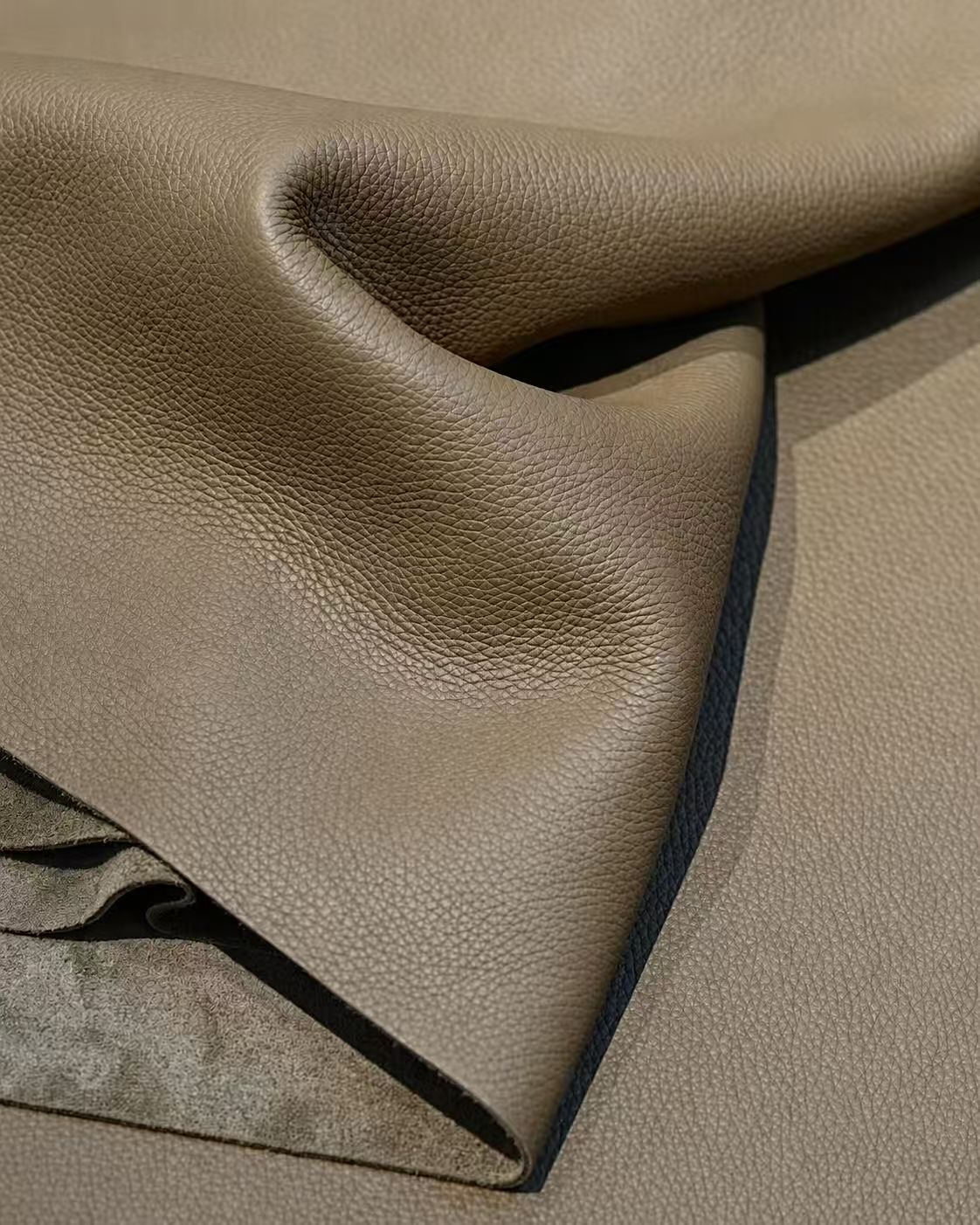
A buyer's guide to Italian leather
Vegetable-tanned, chrome-tanned, full-grain, top-grain: what each term means and when to specify it.
When you brief a leather project, two decisions shape almost everything else: the grain of the leather and the tannage. Get the vocabulary right and your quote, your lead time, and your finished product all become more predictable.
Grain: which layer of the hide
- Full-grain — the outermost layer with its natural surface intact. Shows the hide’s real markings, breathes, and develops a patina. The most durable and the most premium.
- Top-grain — the surface lightly sanded and corrected to remove imperfections, then finished. More uniform, slightly less character.
- Split / “genuine leather” — the lower layers of the hide left after the top is separated. Cheaper, weaker, often heavily coated. “Genuine leather” is a low bar, not a compliment.
Tannage: how the hide becomes leather
- Vegetable-tanned — tanned with plant tannins over weeks. Firm, warm-toned, ages beautifully, holds structure. The Tuscan tradition. Slower and costlier.
- Chrome-tanned — tanned with chromium salts in a day or two. Softer, more colour-stable, water-resistant, less expensive. The majority of the world’s leather.
Neither is “better” in the abstract. A structured tote may want vegetable-tanned firmness; a soft hobo may want chrome-tanned drape. Many bags use both in different parts.
Other terms worth knowing
- Saffiano — a cross-hatch texture pressed into the surface with a protective finish; scratch-resistant and structured.
- Suede / nubuck — the flesh side (suede) or buffed grain side (nubuck), with a soft nap.
- Aniline / semi-aniline — describes how much the surface is coated: aniline shows the most natural grain, pigmented hides the most.
How to specify it
In a brief, name the grain, the tannage, the finish, the weight (in mm or oz), and a colour reference (a Pantone or, better, a physical swatch). “Full-grain vegetable-tanned calf, 1.4–1.6mm, semi-aniline, warm cognac” tells a tannery exactly what to pull. “Brown leather” does not.
When in doubt, ask for samples. A two-minute conversation about hides at the briefing stage prevents the most expensive kind of surprise — the one you discover on the first sample.
Start with an existing development
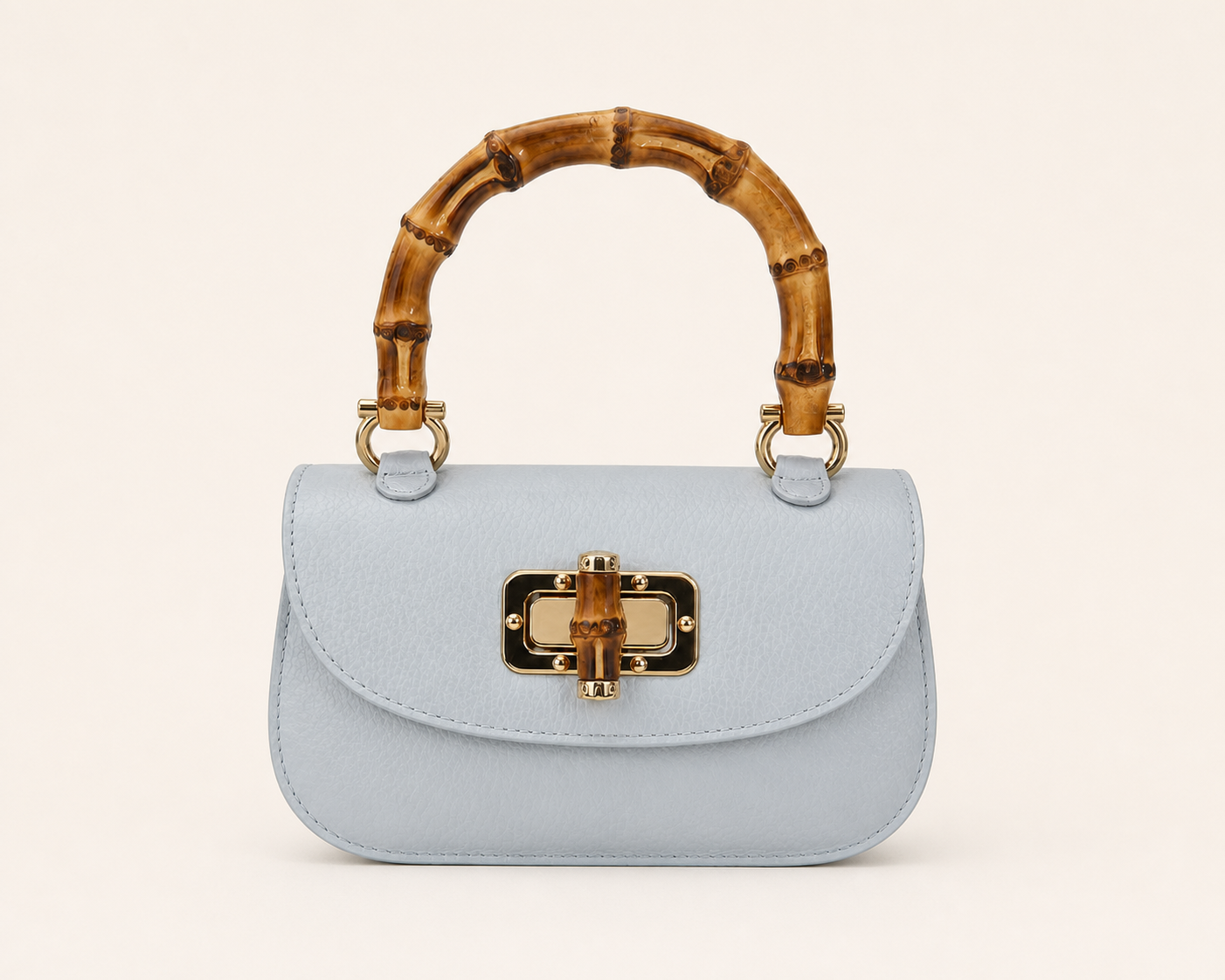
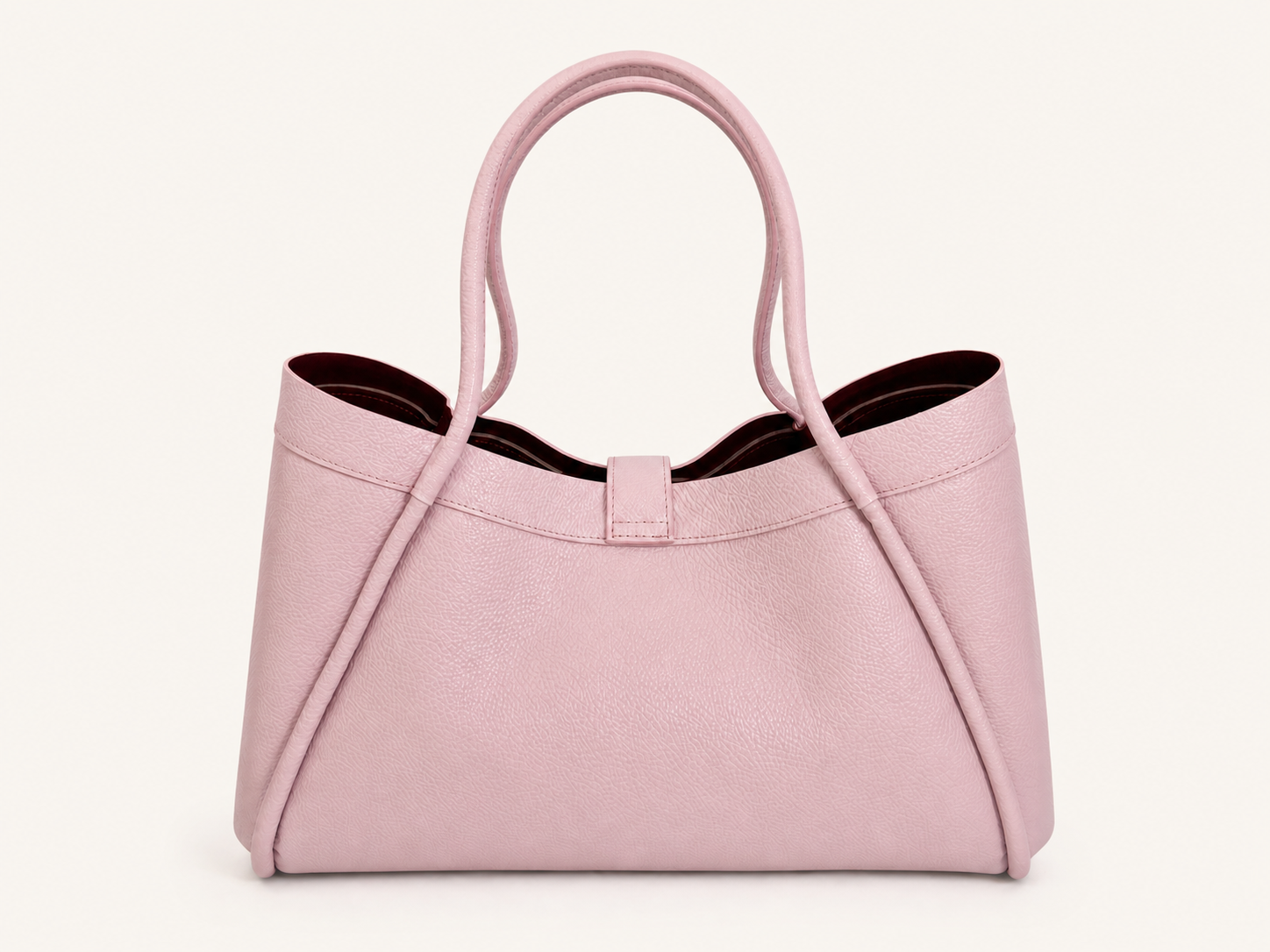
Put the detail into practice
Choose an existing FRAYDA model, or tell us about your defined design and production plan for a feasibility assessment.